Canada Commemorates the 90th Anniversary of the Holodomor
23 November 2023 00:46
During the week marking the 90th anniversary of the Holodomor, numerous events are being held across Canada to honor the memory of millions of Ukrainians who were tortured and killed by starvation.
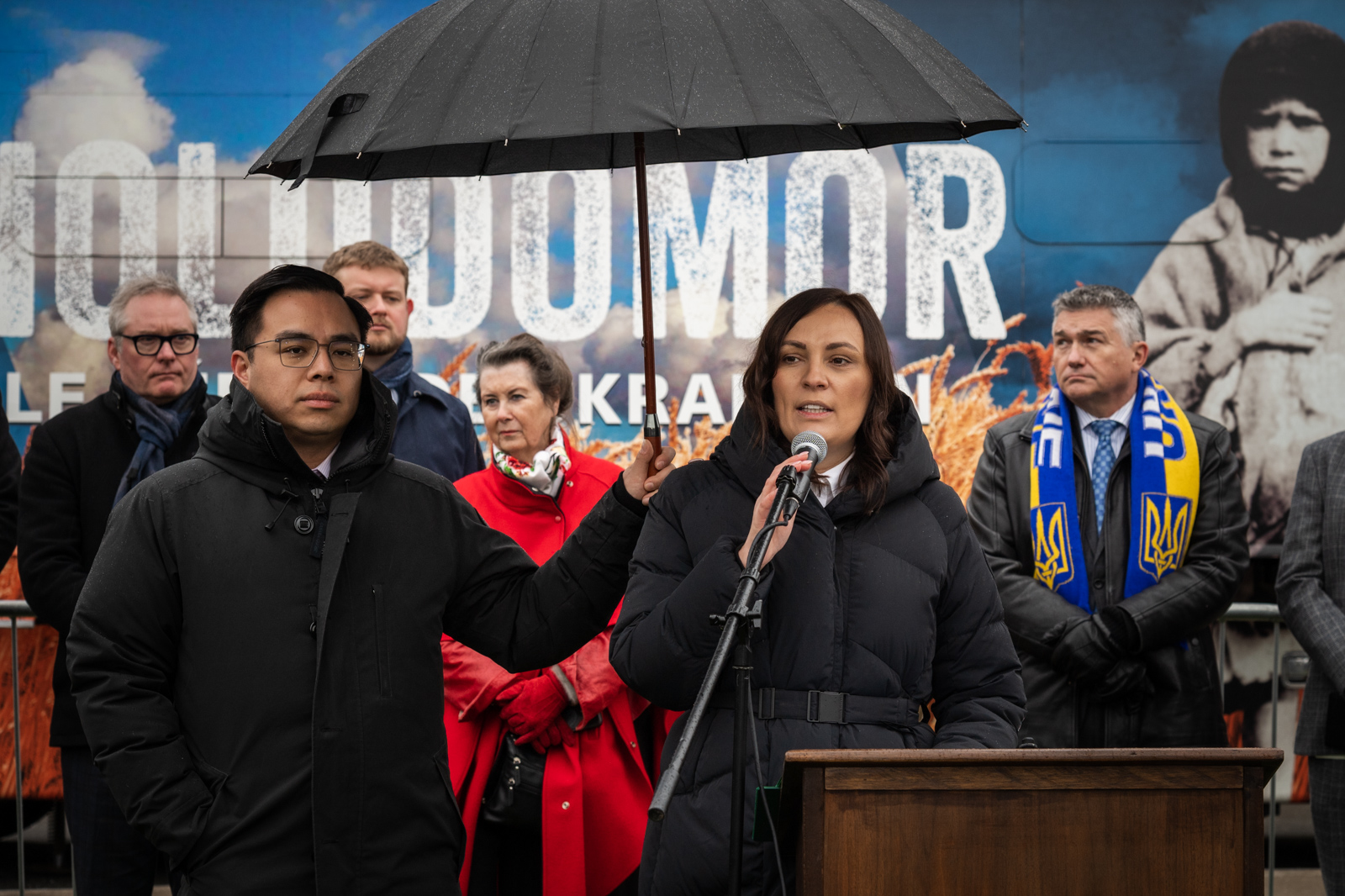
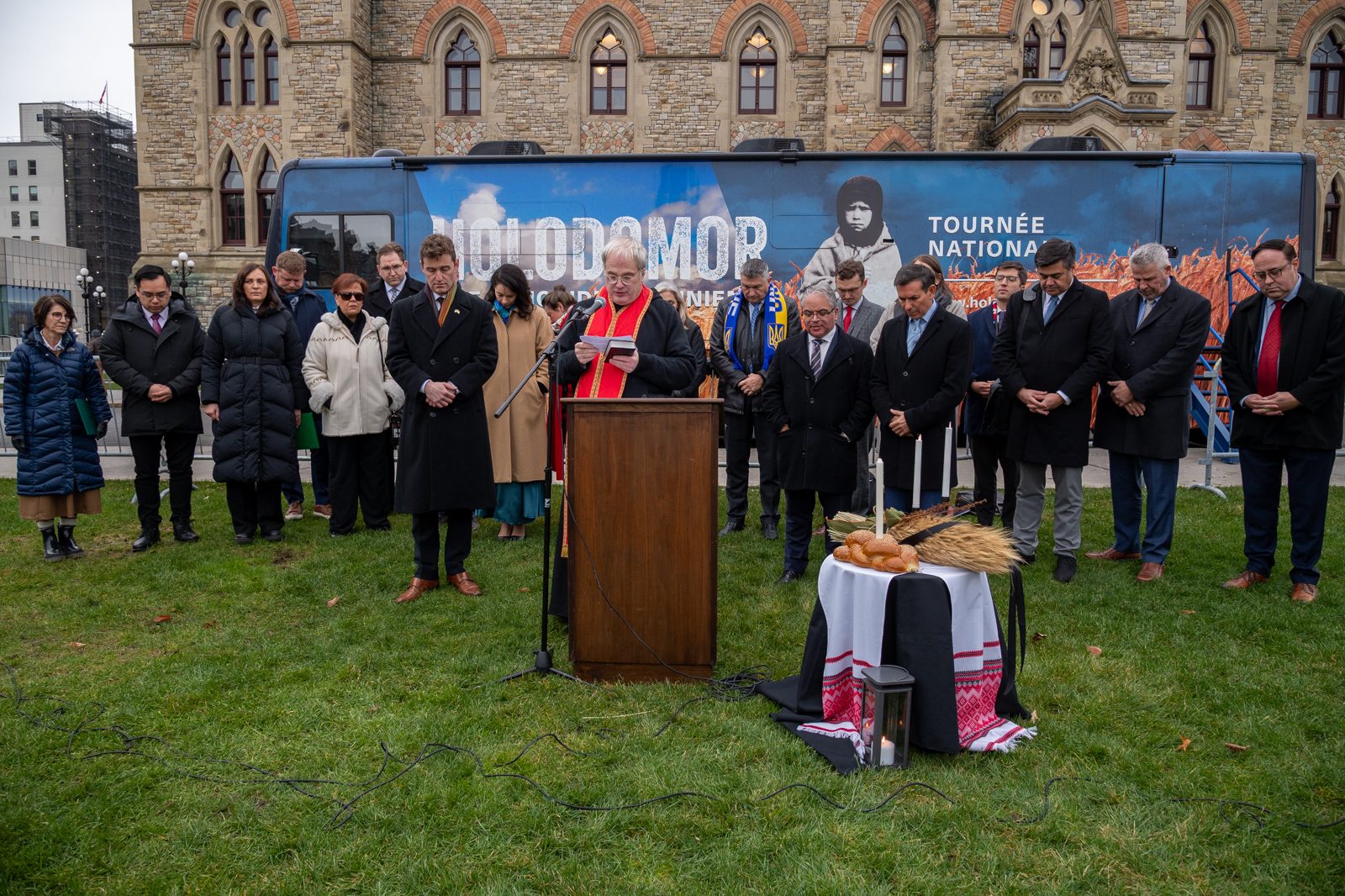
Today, the Embassy of Ukraine in Canada, together with the Canada-Ukraine Parliamentary Friendship Group, UCC National - Ukrainian Canadian Congress, foreign diplomats, Canadian politicians, and clergy, held a commemorative event on Parliament Hill in Ottawa to honor the victims of the 1932-1933 Holodomor.
Speeches and messages of support for Ukraine were delivered by Members of the Canadian Parliament from various political parties, including Ivan Baker, James Bezan, Martin Champoux, Heather McPherson, and the Executive Director of the Ukrainian Canadian Congress, Ihor Michalchyshyn, among others.
Ukraine’s Ambassador to Canada, Yuliya Kovaliv, reminded everyone of the horrific crimes that Russia, just as 90 years ago, is committing today against the Ukrainian people. She also expressed gratitude to Canada for its support and recognition of the Holodomor at both the federal and provincial levels.
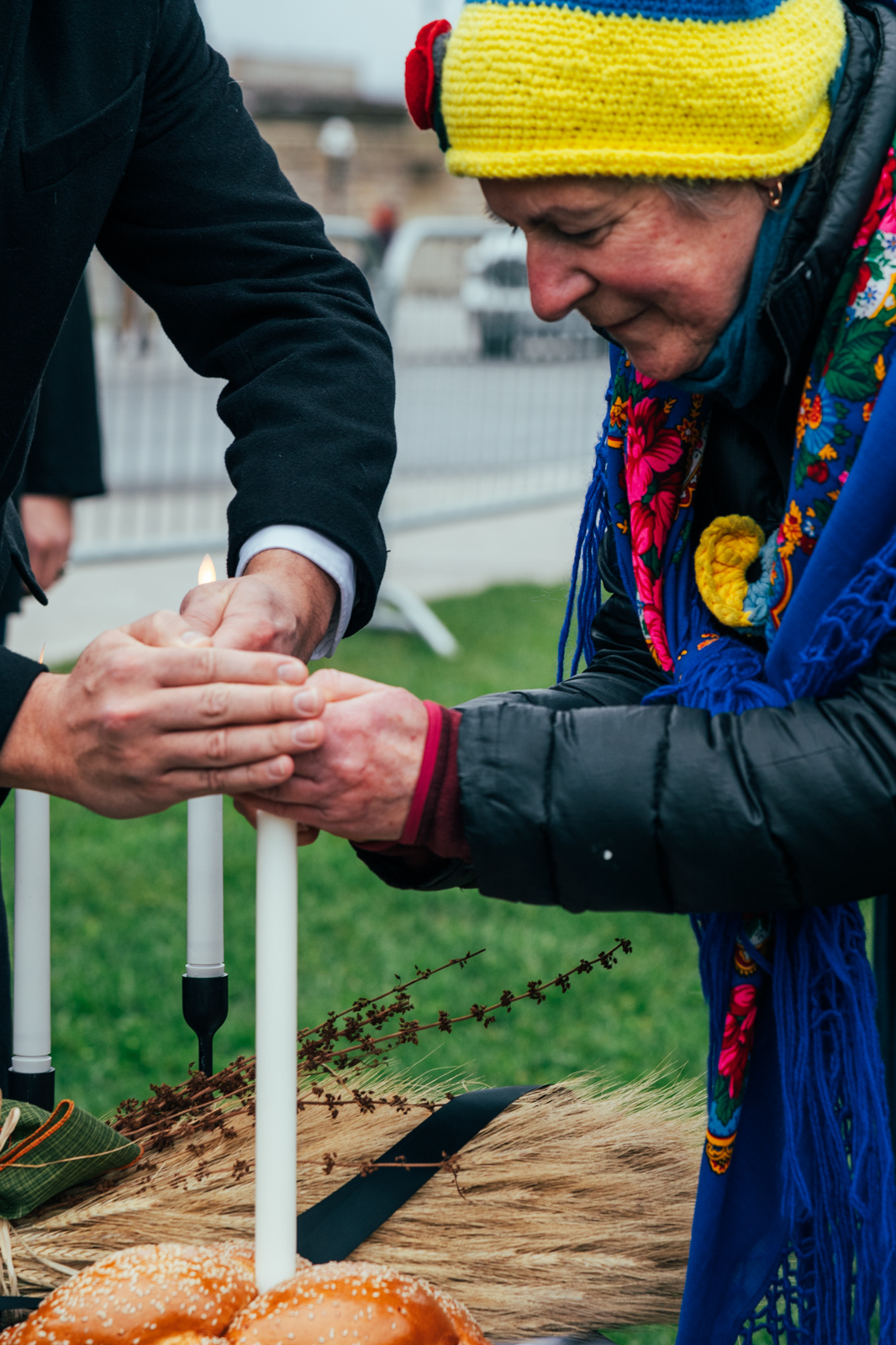
A joint prayer was held to honor the memory of all the Holodomor victims.
Eternal memory to the millions of Ukrainians who were murdered by starvation in 1932-1933.
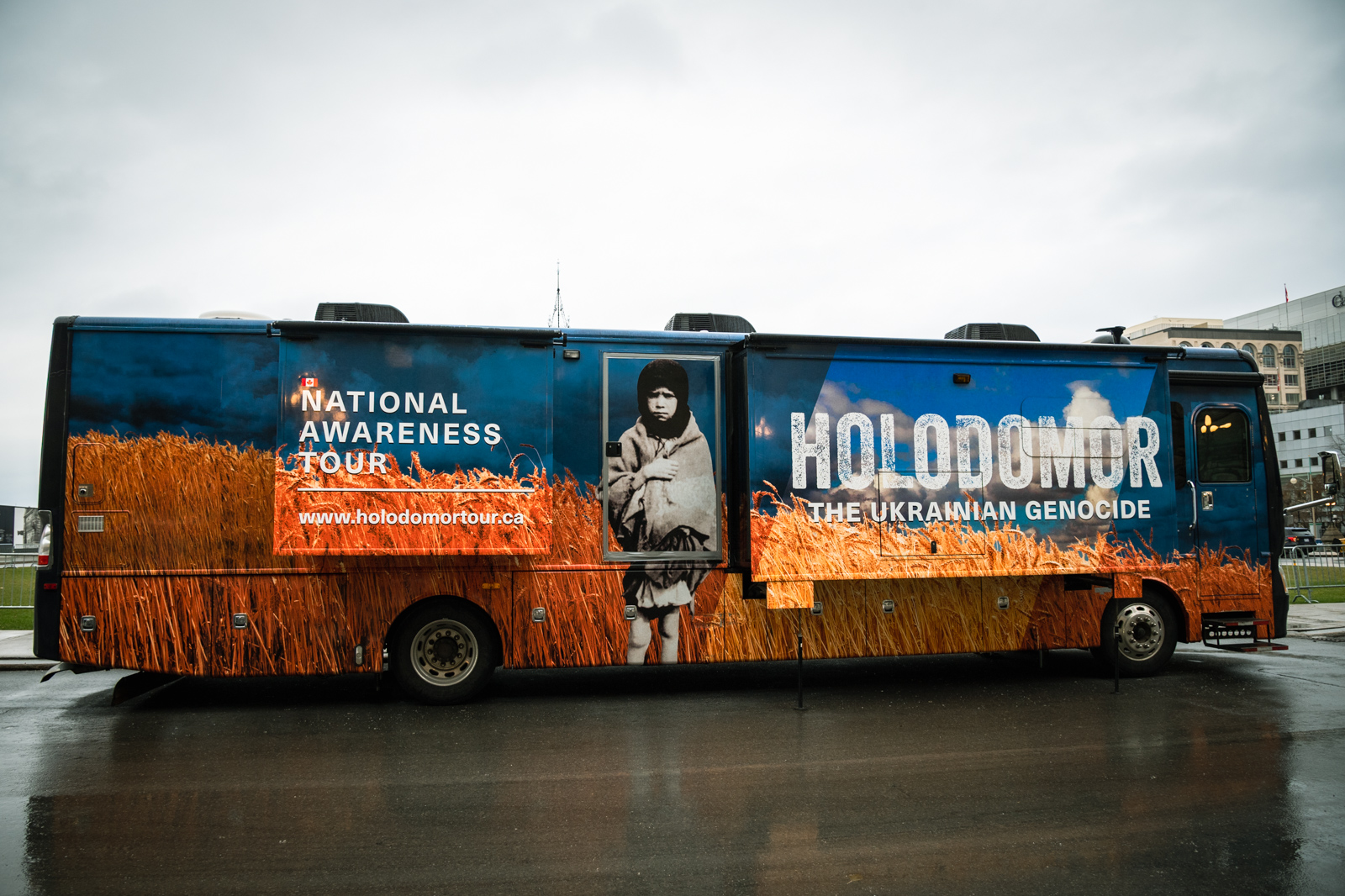
An important part of the event was the presence of the Holodomor Mobile Classroom from the Holodomor National Awareness Tour on Parliament Hill.
This unique Canadian project, implemented by the Canada-Ukraine Foundation in collaboration with the Ukrainian Canadian Congress, the Holodomor Research and Education Consortium (HREC), and the Ukrainian Canadian Research & Documentation Centre Toronto, has been supported by the Governments of Canada, Ontario, and Manitoba.
The Holodomor Mobile Classroom is a bus converted into a modern, digital, multimedia interactive classroom on wheels. Its primary goal is to raise Canadians’ awareness of the Holodomor in Ukraine. Since its journeys across Canada began in 2016, the bus has been visited by over 40,000 Canadian students and educators, as well as more than 25,000 Canadian citizens from coast to coast, sharing with them the history of the Holodomor and its relevance to the world today.